
Why the future of seafarer health depends not only on supporting those who are unwell, but also on helping the entire workforce remain healthy
Occupational health has traditionally focused on people who are already unwell or at greater risk. Early identification and appropriate care remain essential. However, the Re:fresh findings reveal a broader opportunity – helping healthy seafarers stay healthy.
Re:fresh 2026 presents a mixed but increasingly positive picture. Physical health remains a concern, as obesity and lifestyle-related risks continue to affect seafarers. Psychological health, however, is gradually improving: happiness rose, stress declined and overall wellbeing remained high, with 88% of seafarers classified as “all well”.
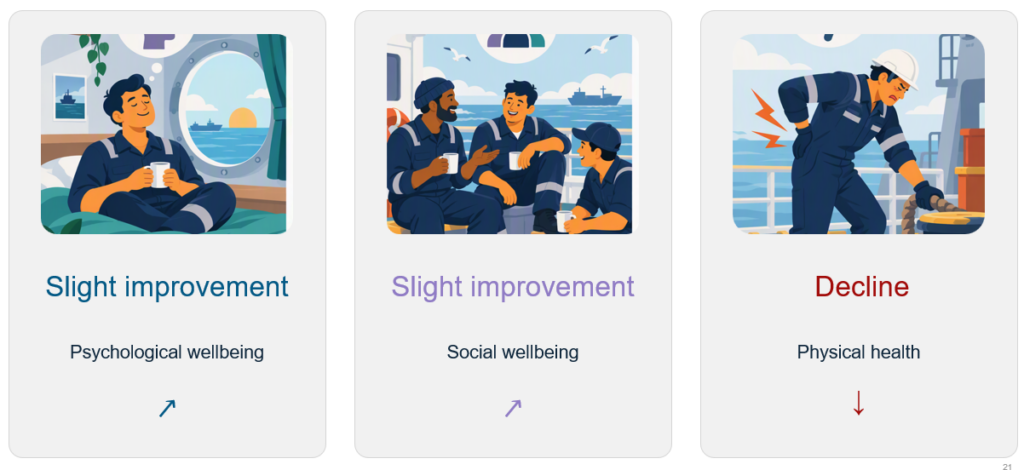
The physical health findings further underline the need for prevention. Nearly one in three seafarers (31%) reported a health issue, most often a musculoskeletal condition, but also hypertension, diabetes and other noncommunicable diseases (NCDs). Marine Benefits claims data show a similar pattern, with many leading conditions linked to lifestyle-related risks. This aligns with World Health Organization evidence that 80% of premature heart disease, stroke and diabetes could be prevented by addressing shared, modifiable risk factors. The potential benefits of earlier action are therefore considerable.
Although the improvements are modest, the direction across several indicators is encouraging. The growing focus on seafarer health and wellbeing, and the initiatives introduced across the industry may be beginning to have an effect.
Yet averages do not tell the whole story. Some seafarers still experience substantial stress, psychological distress and difficulty functioning day to day. Overall, 14% reported psychological distress, including challenges with concentration, coping and productivity. This creates a dual responsibility: providing targeted support to those who are struggling while investing in the wider workforce before problems arise.
Moving upstream. This is the core principle of health promotion and prevention.
Instead of waiting for risk factors to become illness, prevention asks what can be done sooner. How can we reduce risk, strengthen health and create working and living conditions that help people remain well? This does not mean diverting resources from seafarers who need treatment or targeted support. It means widening our ambition. Health promotion can help those struggling today, those whose risks are increasing as well as those who are healthy and want to remain so.
For the maritime industry, this requires a broad focus on physical activity, nutrition, smoking, sleep and recovery, psychological wellbeing and the social environment onboard. It also requires recognising that individual behaviour is only part of the picture. Re:fresh shows that workload, opportunities for recovery, onboard culture, social support and the wider working environment all shape seafarer health and wellbeing.
Effective health promotion cannot simply instruct people to make healthier choices. It must create the conditions that make healthier choices, behaviours and lives possible and sustainable at sea. The greatest opportunity may lie not in treating more illness, but in preventing it.
Health promotion as a workforce strategy
There is another compelling reason to invest in prevention: retention.
Re:fresh 2026 shows that retention is closely linked to health, wellbeing and the experience of working at sea. Seafarers with better psychological wellbeing and lower stress were much more likely to report no intention of leaving. Among female seafarers, for example, 81% of those with low stress had not considered leaving, compared with 56% of those with high stress. Greater engagement and satisfaction were also associated with a stronger intention to stay.
This sends a clear message to shipping- and manning companies: health, wellbeing and retention are interconnected challenges. Health promotion can therefore be more than a wellbeing programme or employee benefit. It can become part of a wider workforce strategy, supporting healthier working lives while addressing health risks, engagement, retention and long-term workforce sustainability. Supporting a seafarer who becomes unwell matters, but so does supporting the many more who have not.
Keeping healthy people healthy
The industry must therefore ask not only “How do we support seafarers when they become unwell?” but also “How do we help them remain healthy throughout their careers?” That shift in perspective matters.It moves health promotion upstream, from reacting to problems to creating healthier people, healthier workplaces and a more sustainable maritime workforce. For seafarers, this offers a better chance of a healthy, sustainable working life at sea. For shipping and manning companies, it means recognising that prevention and health promotion are not simply investments in health; they are investments in the people the industry depends on and hopes to retain.
Rebecca Hayes Mejia
Public Health Manager
Marine Benefits